
Brazilian Jewel Care Guide
Typhochlaena seladonia
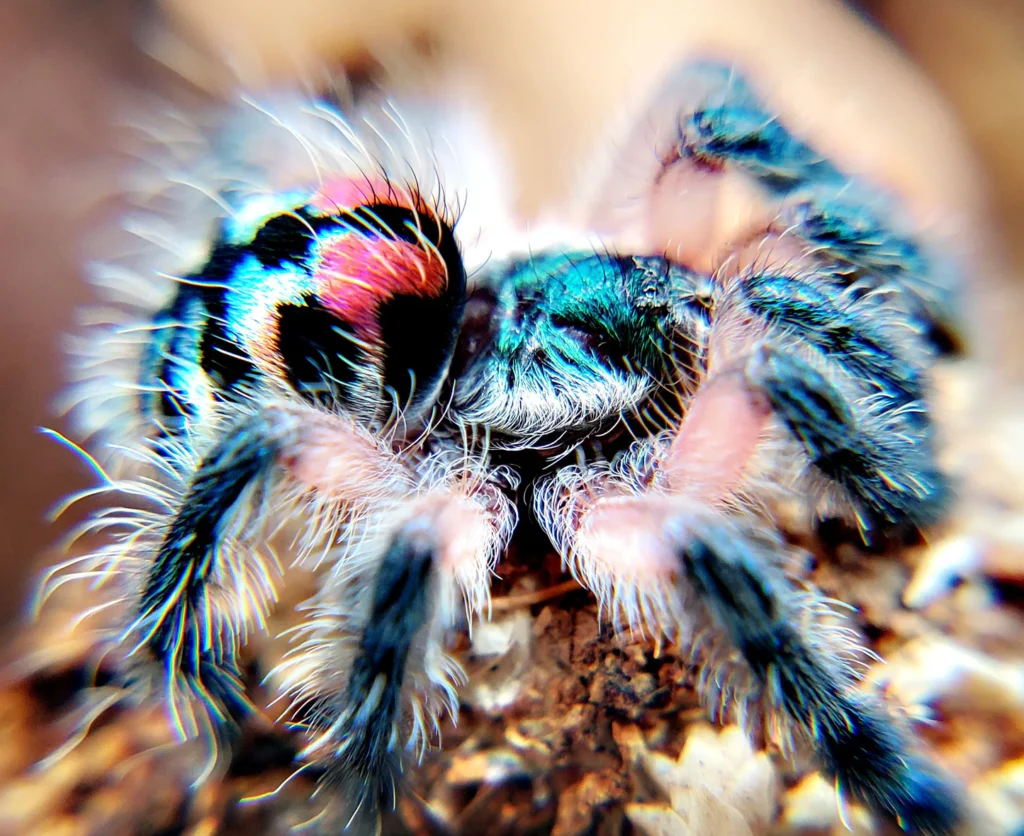
The Brazilian Jewel Tarantula is one of the most striking tarantulas in the hobby, prized for its vivid metallic blues, greens, and pinks. Native to Brazil, this small arboreal species is best suited for experienced keepers due to its sensitivity and specific environmental needs.
Overview
- Common Name: Brazilian Jewel Tarantula
- Scientific Name: Typhochlaena seladonia
- Origin: Brazil (Atlantic Forest region)
- Type: Arboreal
- Adult Size: ~2–2.5 inches (5–6 cm) leg span
- Temperament: Skittish, fast, non-aggressive
- Experience Level: Intermediate to Advanced
Enclosure
Brazilian Jewel Tarantulas are strictly arboreal and require vertical space.
- Enclosure Type: Tall arboreal enclosure with good ventilation
- Size: Small but vertical (they do not need much floor space)
- Decor:
- Cork bark slabs or tubes
- Natural wood and branches
- Leaf litter and foliage for security
⚠️ This species builds silk retreats inside bark crevices, not open webs. Providing tight hiding spaces is essential.
Substrate
- Depth: 1–2 inches
- Type: Coco fiber, organic soil, or a bioactive mix
- Moisture: Slightly moist, never wet
Substrate mainly helps maintain humidity rather than serving as living space.
Temperature & Humidity
- Temperature: 72–78°F (22–26°C)
- Humidity: 70–80%
Maintain humidity by lightly misting enclosure walls and décor—not the spider directly. Good airflow is critical to prevent stagnant, unhealthy conditions.
Feeding
Brazilian Jewel Tarantulas have small appetites and can be shy feeders.
- Prey Size: Small crickets, fruit flies (for slings), or roach nymphs
- Feeding Frequency:
- Slings: 1–2 times per week
- Juveniles/Adults: Once weekly or less
Remove uneaten prey after 24 hours to avoid stress or injury.
Water
- Provide light misting and occasional water droplets on enclosure walls
- A shallow water dish is optional but often unused
This species prefers to drink from condensation rather than standing water.
Temperament & Handling
- Very fast and flighty
- Handling is not recommended
- Defensive biting is rare, but stress can be fatal
Observation is the best way to enjoy this species.
Molting & Growth
- Growth is slow, especially in cooler conditions
- Expect long premolt periods with reduced feeding
- Never disturb the enclosure during a molt
Proper humidity is critical during molting stages.
Important Notes
- This species is sensitive to poor ventilation and excess moisture
- Sudden environmental changes can be fatal
- Always prioritize stability over frequent enclosure adjustments
Summary
The Brazilian Jewel Tarantula is a true display species—small, elusive, and absolutely stunning. While not ideal for beginners, dedicated keepers who provide a stable, well-ventilated arboreal setup will be rewarded with one of the most beautiful tarantulas in the world.